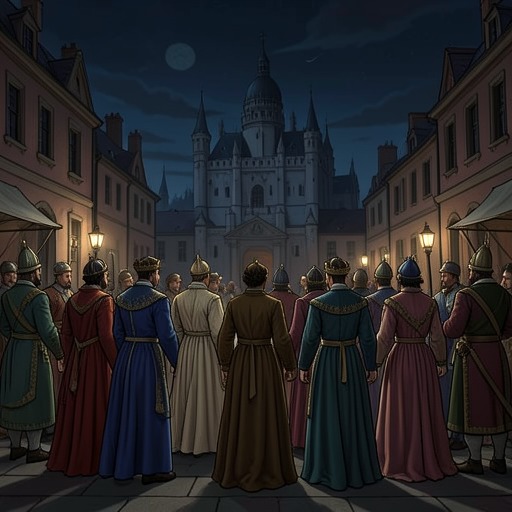
Queen Susan
The Horse and His BoyQueen Susan’s refusal to marry Prince Rabadash turns a royal courtship into a question of personal freedom and political danger. In Tashbaan she rejects him outright, and when the Narnians recognize that his desire may be enforced by threat, she calls for their immediate departure.
Identity and the Courtship
During the Narnians’ stay in Tashbaan, Susan’s brother, King Edmund, asks whether she has decided to marry Prince Rabadash. Her answer is unambiguous: she will not accept him for all the jewels in Tashbaan. Her refusal sets the material splendor of the city against the choice that its wealth cannot purchase.
Susan and Edmund are siblings, not spouses. Susan’s rejection is part of a wider change in how she understands Rabadash. She acknowledges that she once showed him favor, but explains that he behaved differently when he was a guest in Narnia: at a tournament arranged by King Peter, he performed impressive feats and conducted himself courteously during a seven-day visit. In Tashbaan, she has seen another side of him.
Recognizing the Threat
The Narnians’ judgment of Rabadash hardens as they compare his behavior in Narnia with what they have witnessed in his own city. Edmund describes him as proud, violent, cruel, and self-indulgent. Susan responds by invoking Aslan and proposing that they leave Tashbaan that very day.
Her urgency meets a difficult political reality. Edmund has been watching developments for more than two days and says Rabadash is angry at Susan’s delays and uncertain answers. When Edmund deflected the prince’s direct question with jokes and suggested that Susan’s suit was likely to fail, Rabadash grew angry and dangerous, though he continued to veil his threats in courtesy. Tumnus reports a related warning from the Grand Vizier, who implied that the Narnians could return to Narnia only if they left Susan behind as a bride for the prince.
Freedom and Narrative Role
Susan names the danger plainly: she asks whether Rabadash means to make her his wife by force. Edmund fears that she may be made a wife—or, worse, a slave. The exchange changes the meaning of the proposed marriage: what might have seemed a diplomatic match is revealed as a threat to Susan’s liberty and to the Narnians’ safe departure.
Susan’s decision to leave is therefore both personal refusal and recognition of political coercion. Her brief declaration of intent comes before Edmund explains the full danger, showing that she already sees the courtship as unacceptable; the reports from Edmund and Tumnus then give that refusal its immediate stakes. The episode places her choice against a system in which a powerful suitor may try to turn a woman’s consent into an obligation, and makes the prospect of escape central to the Narnians’ predicament.